Abdullah F a, Alikhani M a, Teixeira CC a, Weitz La, Sangsuwon C a , Nervina JM a, Alikhani M a,b
Nemaline rod myopathy (NM) is a rare congenital myopathy characterized by progressive muscle weakness and the pathognomonic presence of rod-like structures within muscle fibers. While systemic manifestations are well-documented, craniofacial and orthodontic complications remain underreported in the literature. Here, we present a case of a 26-year-old female patient with nemaline rod myopathy presenting with complex craniofacial manifestations, obstructive sleep apnea, posterior rhinorrhea, and kyphoscoliosis. Weak muscles can explain the craniofacial manifestation of the disease that includes a skeletal open bite, deep palate with thick mucosa, flaccid soft palate that cannot provide proper nasal seal, difficulty in swallowing, tongue trust swallowing, decrease in the size of the coronoid process, a decrease in the size and density of condyles, decrease in size of zygomatic bone, general reduction of trabecular bone and cortical bone, asymmetric cranial base and sporadic ossification of soft tissues. This case underscores the craniofacial morphological changes in patients with nemaline rod myopathy and emphasizes the need for interdisciplinary collaboration, tailored approaches, and neuromuscular adaptation considerations.
Keywords: Nemaline myopathy, craniofacial abnormalities, temporalis muscle, orthodontics, craniofacial orthopedics, obstructive sleep apnea, interdisciplinary care.
Historically, studies of the relationship between function and form have focused on the trabeculae of long bones. However, few studies have established a relation between function and the skeletal form in the craniofacial area [1-4]. This is due to the complexity of the different functions and the form in the craniofacial area. The craniofacial skeleton, unlike long bones, is considered a non-weight-bearing bone, and its form, especially cortical bone, supports local muscular activities that participate in chewing, swallowing, breathing, speech, holding the position of the head, and facial expression. In addition, muscular coordination and, consequently, skeletal adaptation are necessary to support primary senses in the craniofacial area, such as vision, smell, and hearing.
Craniofacial growth and morphology are profoundly influenced by muscle activity. The form of the skeleton is affected by two different phenomena: local, which is adapted to local muscles and soft tissue, and general, which is affected by general function created by complex muscle activities and can, therefore, affect the general form of the skeleton. The growth and development of the craniofacial skeleton supports growing organs, such as the brain, and functional spaces required for breathing and eating, at different time points [5-7].
Here, we present a patient who developed a particular skeletal deformity due to Nemaline rod myopathy (NM). The disease derives its name from the Greek word “nema,” meaning thread, referring to the characteristic thread-like inclusions visible on muscle biopsy [8, 9]. This disease is a rare congenital myopathy characterized by the presence of rod-shaped inclusions (nemaline bodies) within skeletal muscle fibers, which are pathognomonic on biopsy [10, 11]. First described in 1963 by Shy et al., NM is genetically and clinically heterogeneous, resulting from mutations in genes encoding thin filament–associated proteins such as ACTA1, NEB, TPM2, TPM3, TNNT1, and CFL2 [12]. These mutations disrupt sarcomeric integrity and impair muscle contractility, leading to a spectrum of disease severity ranging from perinatal lethal forms to relatively mild, adult-onset variants.
Due to weak muscles, these patients demonstrate significant systemic and local features [12]. Nemaline myopathy causes weakness and poor tone (hypotonia) in the muscles of the face, neck, and upper limbs [9, 11-13]. Respiratory insufficiency is a common and often life-threatening complication, particularly in severe forms [14]. Patients frequently require non-invasive positive pressure ventilation (BiPAP/CPAP) or, in severe cases, mechanical ventilation [13]. Swallowing difficulties and feeding problems are common, particularly in severe forms [13]. This can lead to failure to thrive and aspiration pneumonia [14]. While less common, some patients may develop cardiomyopathy, particularly those with ACTA1 mutations [15].
Unfortunately, limited information is available regarding the craniofacial manifestations of the disease. Understanding the craniofacial skeletal changes associated with NM is not only clinically meaningful for orthodontic and orthopedic treatment of these patients but can also shed light on the relationship between function and skeletal form. Due to the wide variety of muscular weakness, we can study not only the relation between muscle activity and the immediate skeletal unit that is attached to it, but also the effect of changes on the function of breathing, swallowing, chewing, and speech, and their fingerprints on the general form of the skull.
A 26-year-old female patient with a known history of Nemaline rod myopathy presented to our clinic with the chief concern of worsening malocclusion. The patient was suffering from difficulty in swallowing, obstructive sleep apnea, kyphoscoliosis, and posterior rhinorrhea.
The patient reported that the use of BiPAP/CPAP therapy for obstructive sleep apnea, diagnosed approximately two years ago, has contributed to retroclination of the mandibular anterior teeth. Additional medical history was significant for kyphoscoliosis and posterior rhinorrhea.
The patient had undergone orthodontic treatment as a teenager, including the extraction of four premolars and the use of a maxillary expander, followed by removable retainers, though compliance was inconsistent.
Extraoral Examination
Facial analysis revealed a dolichofacial pattern with increased lower facial height, lip incompetence, and lip strain on closure. The head demonstrates a distinct lateral shift (not tilting) to the patient’s right side. Facial asymmetry was present, and the mandible and chin were deviated to the right. Profile analysis demonstrated a convex profile with decreased chin–throat length and increased lower facial height, which was consistent with a hyperdivergent skeletal pattern. Smile analysis showed a narrow arch form with a reverse smile line, broad buccal corridors, occlusal cant, and an incisal display of 70–90% during smiling.
Intraoral Examination
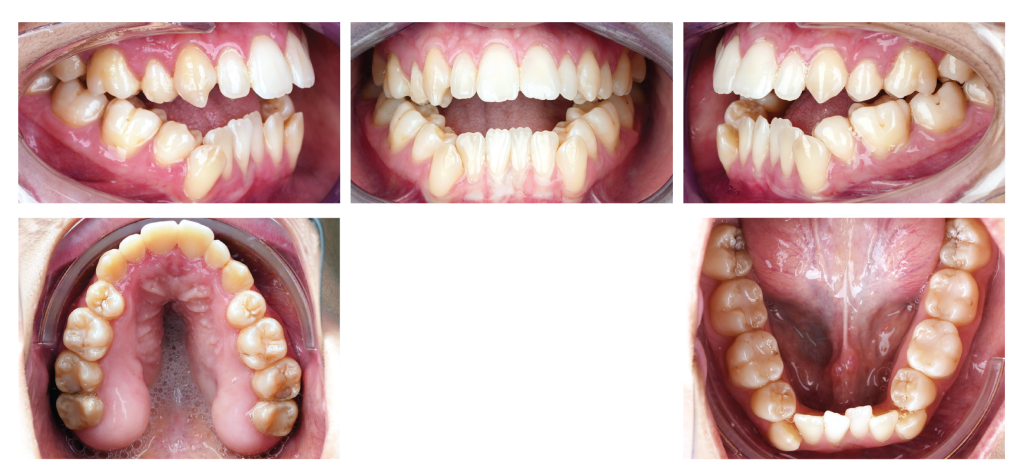
Intraoral findings included poor oral hygiene, normal frenal attachments, and the absence of four premolars due to extractions during the previous orthodontic treatment. The maxillary anterior teeth were proclined, while the mandibular anterior teeth were severely retroclined. Both maxillary and mandibular occlusal planes were divergent, and severe crowding was observed in the mandibular arch (Figure 1). Gingival margins were irregular with improper height of contour, and generalized recession was observed in the posterior segments in both arches. Functionally, occlusion was limited to the distal of the first molars and the second and the third molars. Both arches were severely constricted. A prominent tongue thrust habit during swallowing was observed.
Figure 1: Intra-oral manifestation of a patient with Nemaline Myopathy. Intraoral images of the patient demonstrated severe open bite, severe retroclination of mandibular anterior teeth, severe crowding in the lower arch, severe overjet, and divergent upper and lower occlusal planes.
Cast Analysis
Study models revealed an ABO Discrepancy Index of 71, indicating a very complex case (DI > 31). Crowding was noted in the maxillary (4.4 mm) and mandibular (9.1 mm) arches. A 1.8 mm maxillary anterior Bolton deficiency is likely due to small lateral incisors. The overjet was 8.4 mm. An 8.8 mm open bite extended from the mesial of the first molars. The molars were in a Class III relationship and the canines were Class I. The maxillary midline was deviated 2 mm to the left.
Radiographic Findings
Lateral Cephalometric Analysis
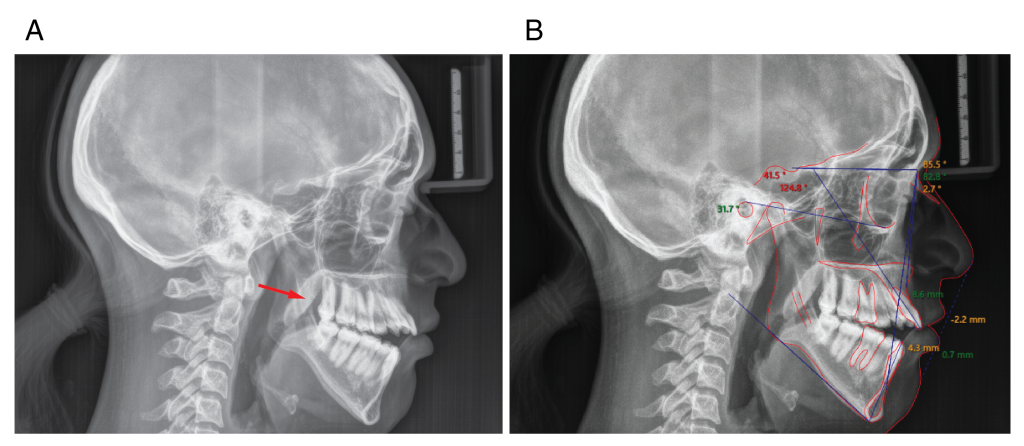
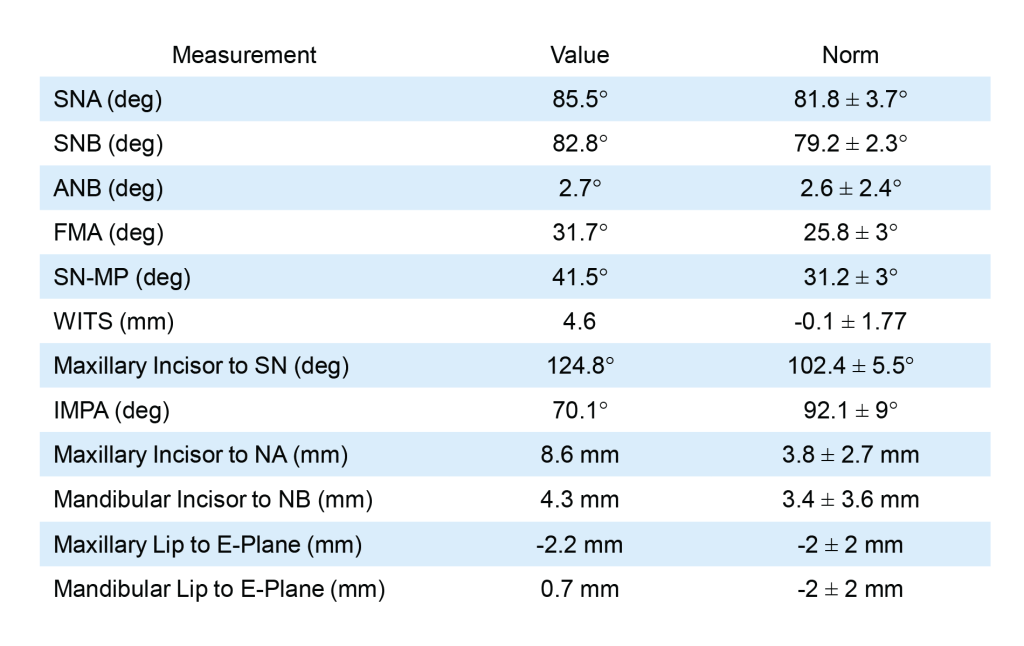
Lateral cephalometric analysis demonstrated a skeletal Class II relationship with mandibular clockwise rotation and a hyperdivergent facial pattern (SN-MP = 41.5°)(WITS = 4.6 mm) (Figure 2). The maxillary incisors were proclined (U1-SN = 124.8°), while the mandibular incisors were severely retroclined (IMPA = 70.1°) (Table I). Soft tissue analysis showed the upper lip was within normal limits relative to the E-plane (-2.2 mm), while the lower lip was slightly deficient (0.7 mm). The patient demonstrated a large and flaccid soft palate.
Figure 2: Lateral cephalogram of the patient with Nemaline Myopathy. (A) The patient demonstrated clockwise rotation of the mandible, which gives the patient a Class II skeletal relationship, increased mandibular plane angle, and increased lower facial height. The soft palate was very prominent (red arrow). (B) cephalometric tracing and analysis.
Table I: Cephalometric analysis of the patient with NM. Skeletal and dental measurements where completed on a Cephalogram obtained before initiation of treatment (deg= degrees, mm= milimeters).
Panoramic Analysis
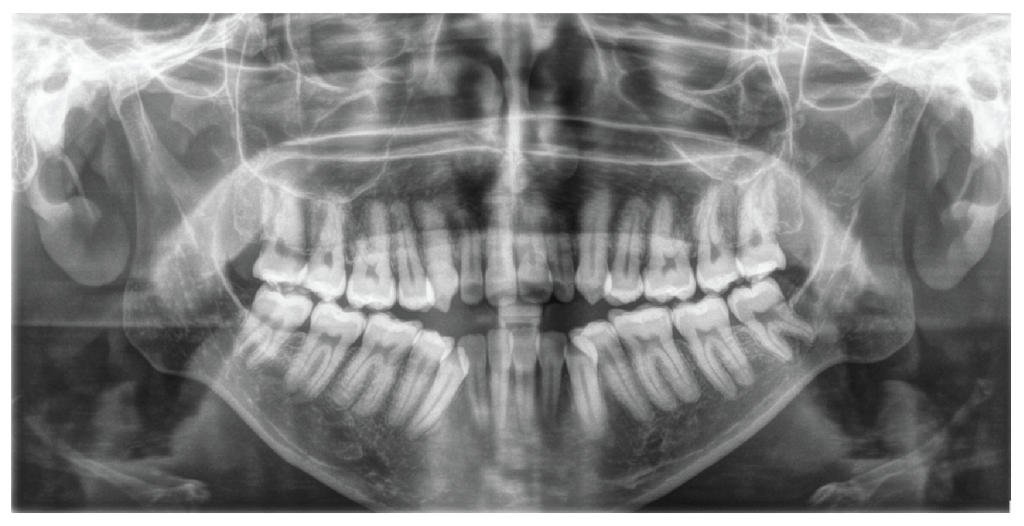
Panoramic radiography revealed the presence of 28 permanent teeth, with four premolars missing due to prior extractions. The roots were fully developed and appeared normal with mesial inclination of posterior teeth in both the maxilla and mandible, as often observed in anterior open bite cases (Figure 3).
Figure 3: Panoramic radiography of a patient with Nemaline Myopathy. Initial panoramic radiograph shows all teeth fully developed, the absence of 4 premolars, rounded dental roots, long and narrow condylar neck, short coronoide process, marked antegonial notch. All teeth were fully developed. The mesial inclination of the maxillary and mandibular posterior teeth was prominent, typical of anterior open bite cases.
Anatomical Comparison
To further analyze the skeletal changes in the patient, a CBCT was taken and compared with an anterior open bite case of similar age, sex, and ethnicity that did not have NM, which is referred through-out the article as the matched open bite, and a normal individual with similar age, sex, and ethnicity that did not have an anterior open bite or NM, which will be referred to as a matched control. The purpose of the comparison was to discover significant variation from the norm, rather than detailed variations that can be observed among normal individuals.
1. Palate
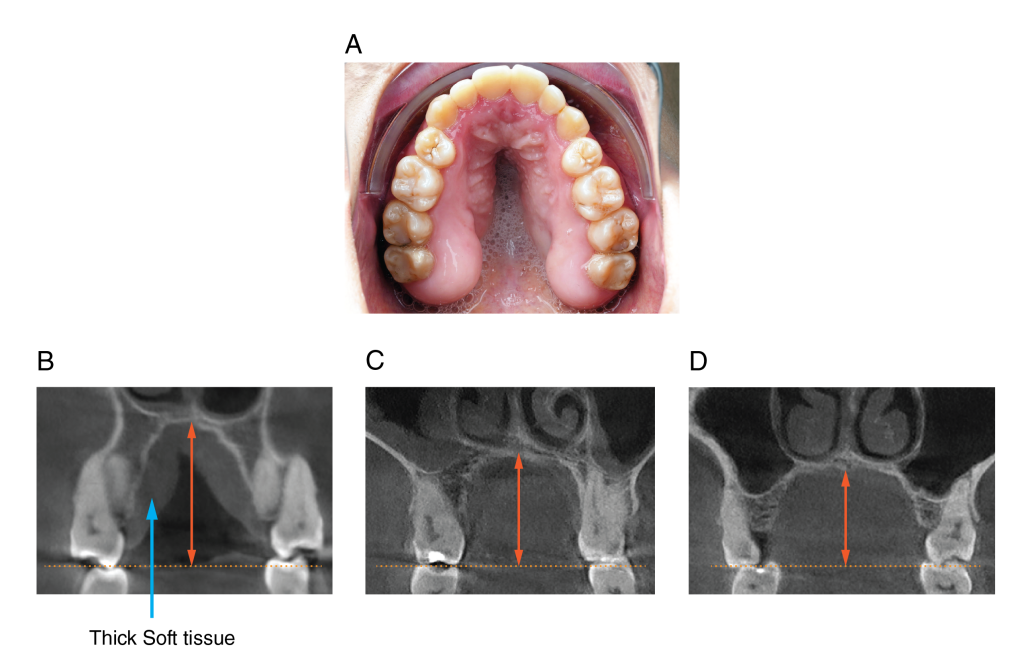
One of the NM patient’s unique features was a high palate with a thick mucosa covering, creating a cleft-shaped structure (Figures 4A and B). While the matched open bite patient also demonstrated a narrow and high palate (Figure 4C) compared with the matched control (Figure 4D), the palatal depth in the NM patient is significantly greater than each of these matched reference patients. The very thick mucosa of the palate in our NM patient is an uncommon finding in open bite cases.
Figure 4: Intraoral and CBCT of the Palate of the NM patient. Palate demonstrates a severe soft tissue cleft, uncommon in most malocclusions (A). CBCT demonstrated a thin palate (B); however, no cleft in the bone was observed. The palate was significantly deeper than that of the matched open bite (C) and the matched control patient (D).
2. Coronoid Process
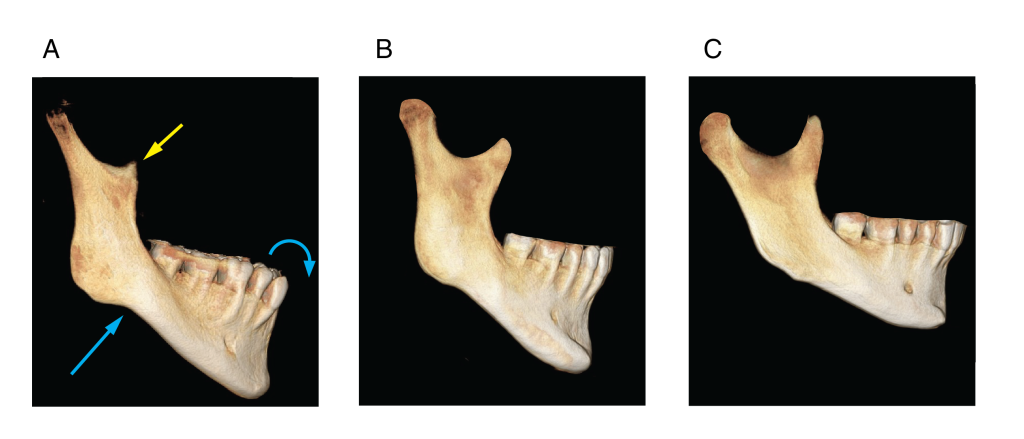
The coronoid process is where the temporalis muscle attaches to the mandible. CBCT analysis of the NM patient demonstrated a significantly small (almost absent) coronoid process compared with the matched open bite and matched control patients (Figure 5).
Figure 5: Lateral view of the mandible comparing coronoid processes. 3D CBCT reconstructions show the right mandibular view of (A) NM, (B) matched open bite and (C) matched control patients. Note the hypoplastic coronoid process in the NM patient (yellow arrow). Also note the clockwise rotation of the mandible (blue curved arrow) and the prominent anti-gonial notch (blue straight arrow) in both the NM, which is present but smaller in the matched open bite patient and is absent in the match control patient.
3. Condylar process
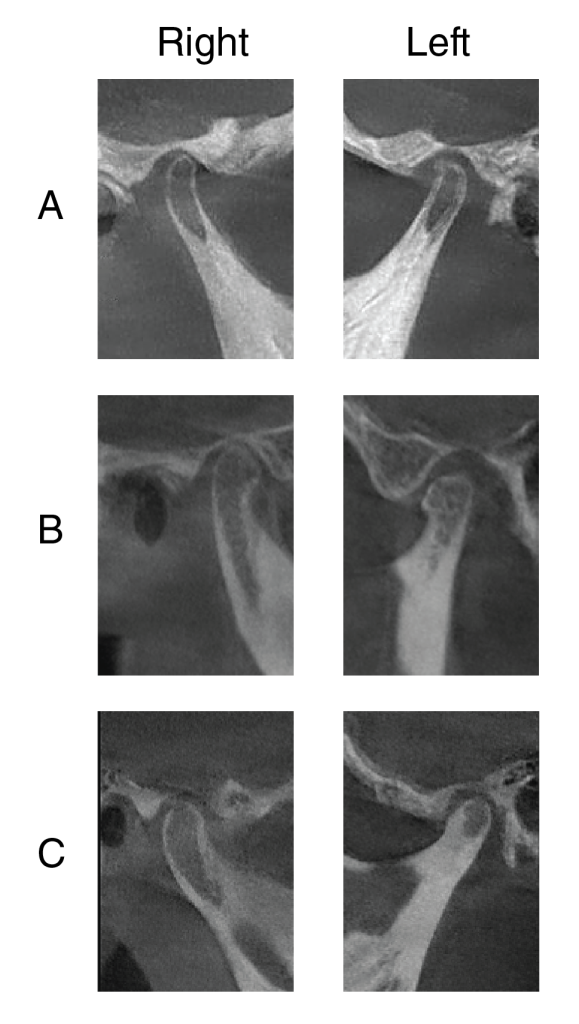
Condyle and condylar neck are either indirectly loaded by muscles of mastication or directly loaded by the lateral pterygoid muscle’s inferior head, and to a certain extent, the ligaments of the temporomandibular joint capsule. Both left and right condyles of the NM patient demonstrated a decrease in overall size, thinner cortical bone, and less trabecular bone compared to the matched open bite and matched control group. A significantly longer neck of the condyle was also observed in the NM patient (Figure 6).
Figure 6: Condyle of a patient with Nemaline Myopathy. Radiographic images show the righ The right and left mandibular condyles of an NM patient (A), a matched open bite (B), and a matched control patient (C). The decrease in size, thinner cortical bone, less trabecular bone, and longer neck differentiate the NM patient from the matched patients.
4. Zygomatic bone
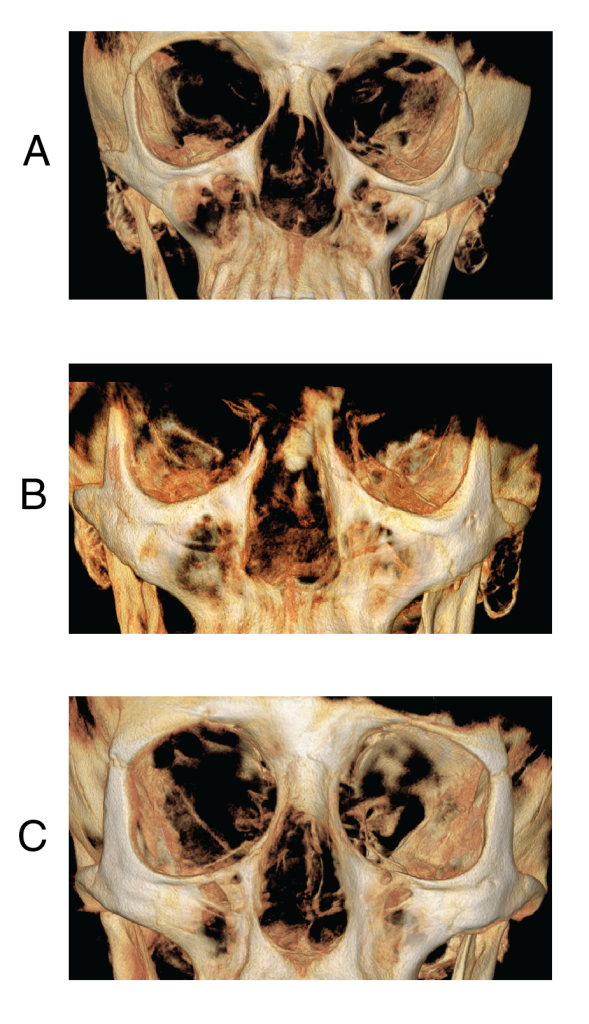
The masseter muscle is attached to the zygomatic arch. Compared to the matched open bite and matched control patients, the zygoma of the NM patient had significantly decreased cortical bone (Figure 7). Similarly, the body of the maxilla and orbital rim demonstrate more porosity and thinner cortical bone in the NM patient.
Figure 7: Zygomatic bone in NM patients. 3D CBCT reconstruction of the (A) NM patient, (B) matched open bite patient, and (C) matched control patient. The orbital rim, zygoma, and maxilla body demonstrate thinner cortical bone and more porosity.
5. Alveolar bone
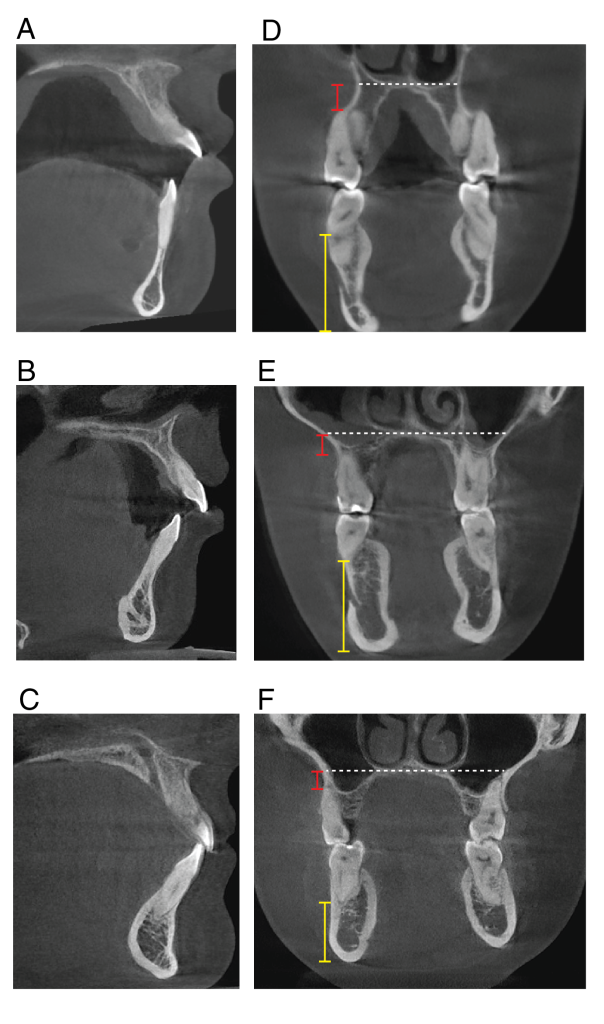
Alveolar bone is not attached to any muscles, but the muscles of mastication can indirectly load it. The alveolar bone in the NM patient consisted of thinner cortical and trabecular bone compared to the matched open bite and matched control patients (Figure 8, A-C). Likewise, the NM patient’s palate was composed of very thin cortical bone, and the symphysis was small with less trabecular bone compared to the other two patients (Figure 8, D-F).
The distance between the apex of molars and the palate in the maxilla and the apex of the mandibular molars and the border of the mandible was much larger in the NM patient compared to both matched open bite and matched control patients (Figure 8, D-F). This demonstrates a significant increase in posterior alveolar height due to the eruption of posterior teeth in the NM patient.
Figure 8. Upper and lower alveolar bone, palate, and symphysis in an NM patient. Radiographic images of the NM patient (A, D), matched open bite (B, E), and matched control patients (C, F). The red bar demonstrates the distance between the palate and the apex of the first molar, while the yellow bar demonstrates the distance between the border of the mandible and the apex of the first molar.
6. Sporadic Ossification or calcification
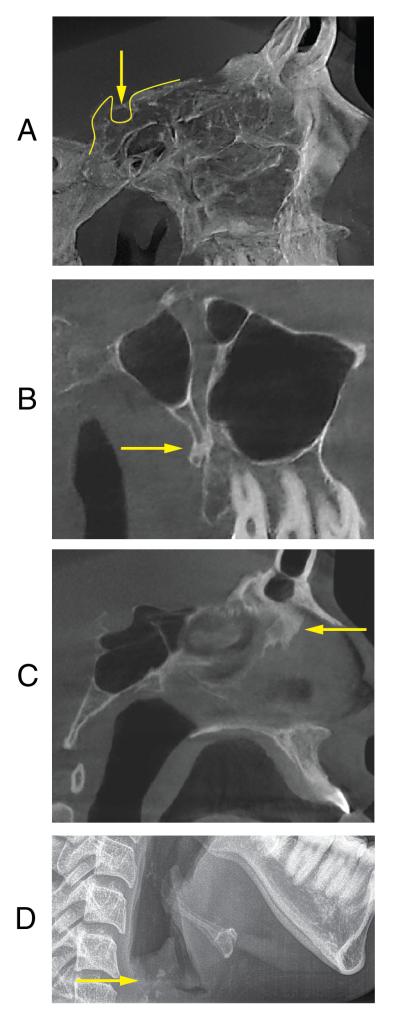
A closer look at CBCT of the NM patient demonstrates sporadic calcification or ossifications in the sella turcica (Figure 9A), pterygomaxillary fissure (Figure 9B), nasal septum (Figure 9C), and neck area (Figure 9D).
Figure 9: Sporadic Ossification in NM patients. Radiographic images show sporadic ossification in the form of a bridge in the sella turcica (A), fusion of the pterygoid process of the sphenoid bone to the posterior wall of the maxilla in the pterygomaxillary fissure (B), nasal septum (C), and neck in the area of the epiglottis (D).
7. Spine – cranium asymmetry
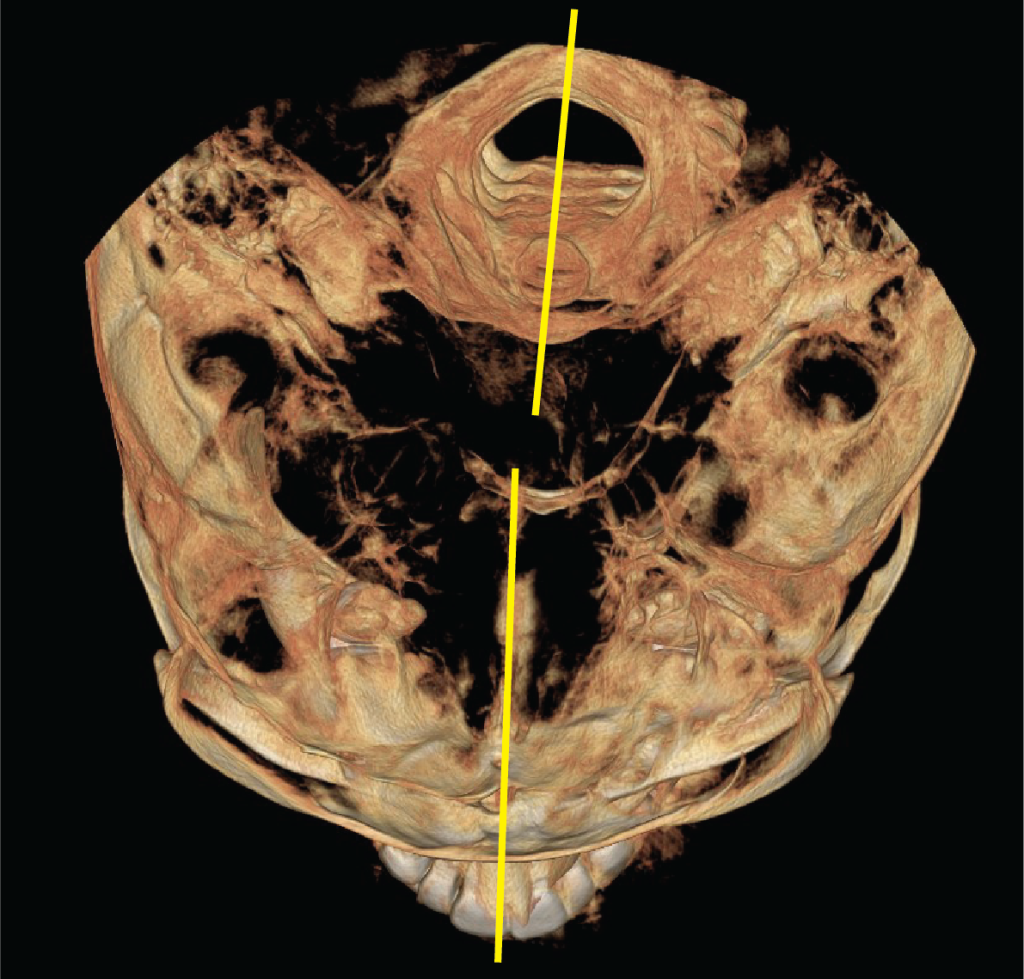
Similar to extraoral findings that demonstrate the head position has shifted to the right, CBCT analysis confirmed misalignment of the spine with a long axis of the cranial base (Figure 10).
Figure 10: Spine-cranium asymmetry in NM patients. CBCT reconstruction of an axial view, demonstrates a significant asymmetry in the patient’s spinal and cranial axes.
Nemaline myopathy is considered one of the congenital myopathies, with an estimated prevalence of approximately 1 in 50,000 live births [11]. The severity of symptoms varies considerably between individuals, and the age of onset can vary from neonate to adult [13]. The disease demonstrates significant genetic heterogeneity, with at least twelve causative genes identified to date, encoding structural or regulatory proteins of the thin filament system [16]. These mutations include ACTA1 (α-skeletal muscle actin), NEB (Nebulin), TPM3 (α-tropomyosin), TPM2(β-tropomyosin), TNNT1 (troponin T), KBTBD 13, CGL2 (Cofinin-2). NEB gene mutation is the most common form [8, 15, 17, 18]. Additional genes, including KLHL40, KLHL41, LMOD3, and others, have been subsequently identified, expanding the genetic complexity of this condition [16].
Based on its clinical manifestations, Nemaline Rod Myopathy can be classified into different groups. The most severe variant, “Severe Congenita Form,” presents in the neonatal period with profound hypotonia, respiratory insufficiency, and feeding difficulties [13]. Usually, infants with the disease lack the muscle strength necessary for normal respiratory function, often requiring immediate ventilatory support and intensive care management [14]. In the “Intermediate Congenital Form,” the patient suffers from moderate muscle weakness and respiratory involvement but generally allows for survival beyond the neonatal period with appropriate supportive care [19]. “Typical Congenital Form” involves childhood onset with progressive muscle weakness, particularly affecting facial, neck, and proximal limb muscles [13]. Muscle weakness is usually most severe in muscles of the face, neck, and proximal muscles [11]. In the “Childhood-Onset Form”, the patient had initially normal early development followed by progressive weakness and motor regression [14]. “Adult-Onset Form” is a mild form presenting in adulthood with slowly progressive muscle weakness and minimal respiratory involvement [19].
While the pathophysiology of NM’s muscular effects is generally well studied, the morphological changes in the craniofacial skeleton, and the etiology behind them, have not been studied to the same extent. This is understandable, given the profound muscular pathology these patients suffer, and the fact that that any skeletal changes that they also have are generally not considered direct cause of the disease. However, a closer look at skeletal changes can shed some light on skeletal changes that may be, in fact, primary co-morbidities that clinicians must address. This is important, since if the skeletal changes are secondary, we can take preventive measures to block their occurrence, or perhaps correct them if they are already present. While some of these skeletal changes could be due to a local decrease in the activity of attached muscles, some are likely to be more global and be a consequence of more comprehensive changes in function, such as breathing or swallowing.
From local factors, we can examine the coronoid, condylar processes, and zygoma since all have direct attachment to craniofacial muscles. Anatomically, the temporalis muscle is broad and fan-shaped and originates from the temporal fossa and temporal fascia, inserting primarily on the coronoid process and the anterior border of the mandibular ramus. It acts as the primary elevator of the mandible, facilitates posterior mandibular retrusion through its posterior fibers, and provides lateral stability to the mandible during functional activities. Developmentally, the temporalis muscle influences mandibular growth, contributes to the development and maintenance of the coronoid process, affects temporal bone development, and impacts overall posterior facial height and mandibular positioning. Conversely, temporalis muscle hypofunction can lead to significant anatomical alterations, such as underdevelopment or absence of the coronoid process due to reduced mechanical stimulation and lack of functional loading, as observed in our NM patient. On the other hand, temporalis hyperactivity can be associated with increased coronoid process length [20-23]. While the masseter and medial pterygoid muscles move the mandible upward and forward, the temporalis muscle fibers produce more upward and backward force, which decreases the load on the condyles by bringing the resultant force of chewing closer to the center of resistance of the mandible. In conditions with weakened temporalis muscles the horizontal component of the resultant force will increase compared with the vertical component, which can contribute to the development of an open bite and an increased risk for temporomandibular joint dysfunction. This is in agreement with animal studies that demonstrate temporalis muscle weakness that produces suboptimal forces can be associated with the development of an open bite malocclusion [24].
Changes in the mandibular condyle’s shape and density or condylar neck can be attributed to weakness of the attached muscles or overall changes in chewing function that can indirectly change the biomechanics of the condyle. The inferior head of the lateral pterygoid muscle is attached to the anterior portion of the condylar neck and the TMJ capsule, which may directly affect the form of the condyle and the condylar neck. At the same time, there is no report on the effect of NM on ligaments; however, the possibility of involvement of TMJ capsules exists, which can further affect the biomechanics of the condyle. Indirectly, the loading of the condyles can be negatively affected in open bite cases because an unstable mechanical environment increases the chance of condylar resorption and altered morphology [25-27]. A decrease in overall mastication load can also indirectly affect the magnitude of the load on the condyles. On the other hand, since the overall muscle activity is reduced in NM patients, the possibility of the mandible being displaced inferiorly and anteriorly during growth increases, allowing the development of a longer condylar neck.
Masseter muscles are attached to the zygomatic arch. Hence, weakness of the masseter muscle can affect the zygoma and adjacent structures, such as the infra-orbital rim and the zygomatic process of the maxilla. Therefore, the decrease in size and increase in porosity of this area can be explained by the weakness of the masseter muscles. A similar porosity can be seen in the gonial angle, which can be related to both weakness of the masseter and medial pterygoid muscles.
Reported reduction in bite force due to impaired muscles of mastication [28-32] can also explain the decrease in thickness of cortical bone in the symphysis and palate and the general reduction of trabecular bone in different areas of the alveolar bone.
Facial muscle hypotonia contributes to various craniofacial manifestations, such as reduced facial animation, creating a myopathic facies marked by difficulty in making facial expressions [11, 12]. While muscle weakness could explain the changes in the attached skeletal unit, some skeletal changes are not necessarily the result of the direct loading but the impact of a change in function, especially swallowing and breathing. In NM, the patient keeps the tongue in a lower position due to a change in tongue tonicity and activity, which does not allow the tongue to help develop the palate [9, 13]. That may explain why our NM patient has a crossbite and a high-arched palate. Since the patient cannot lift the tongue properly, tongue thrusting during swallowing is unavoidable. Thick soft tissue in the area may also be due to the suction effect that the tongue produces during tongue thrust swallowing.
An open bite malocclusion is likely attributable to several interrelated factors associated with muscle weakness, tongue position, and altered upper respiratory tract function. By keeping the mouth open, both the posterior and anterior teeth have more opportunity to erupt, as observed in this case. Extrusion of posterior teeth will cause the mandible to rotate clockwise and create a high mandibular plane angle, retrusion of the mandible, and a Class II skeletal appearance [12]. Extrusion of upper anterior teeth can produce a gummy smile.
Due to the rotation of the mandible downward, these patients demonstrate a dolichofacial pattern with an elongated and narrow facial structure [13]. An increased anti-gonial notch demonstrates that early in life, the direction of growth has changed from horizontal to vertical due to muscle weakness and a progression of open bite.
Another factor contributing to mouth breathing and, therefore, the open bite is chronic obstruction of the nasal passage. Specifically, weakness of the nasopharyngeal muscles can hinder both the closure and clearance mechanisms essential for proper nasal drainage. Therefore, posterior rhinorrhea is a significant clinical manifestation observed in some patients with nemaline myopathy. Additionally, dysfunction in swallowing mechanics can lead to the accumulation of secretions, further complicating the situation. Patients may also experience respiratory muscle weakness, which diminishes their ability to clear secretions through coughing effectively. Furthermore, head and neck position changes can impact drainage patterns, exacerbating the problem. The clinical implications of posterior rhinorrhea can be quite significant, leading to a chronic sensation of postnasal drip, frequent throat clearing, an increased risk of aspiration, disrupted sleep, and a greater likelihood of secondary respiratory infections.
Sleep-disordered breathing is a critical issue for patients with nemaline myopathy, primarily due to the weakness of respiratory muscles and the dysfunction of the upper airway. In general, orofacial hypotonia, glossoptosis, and retrognathia significantly increase the risk of obstructive sleep apnea (OSA) in patients with neuromuscular disorders [33-35]. However, in NM patients, tongue, soft palate and upper airway muscle hypotonia are accompanied by diaphragmatic and intercostal muscle weakness resulting in complex respiratory pathophysiology. The interplay of these factors manifests as reduced lung volumes from diaphragmatic weakness, compromised chest wall mechanics from intercostal muscle weakness, and obstructive events stemming from the hypotonic upper airway muscles. Additionally, some patients may experience central respiratory drive abnormalities (central sleep apnea), further complicating their respiratory challenges. Therefore, noninvasive ventilation such as Continuous Positive Airway Pressure (CPAP) or Bilevel Positive Airway Pressure (BiPAP) is often essential in these patients. Among these options, BiPAP is often favored due to its ability to provide both inspiratory and expiratory pressure support, effectively addressing both obstructive and restrictive components of respiratory dysfunction. Noninvasive ventilation helps prevent nocturnal hypoventilation and the chronic buildup of carbon dioxide (hypercapnia). However, continuous usage of a CPAP mask can produce a mechanical environment that pushes the lower incisors back and increases the overjet significantly, as observed in this patient.
Spinal deformities, particularly scoliosis and kyphoscoliosis, are common complications in individuals with nemaline myopathy (NM) due to truncal weakness and muscle imbalance [13]. Paravertebral muscle weakness plays a crucial role. The weakness of essential muscles, such as the erector spinae and other paravertebral muscles, leads to instability and a lack of support for the spine. In addition, the progressive weakness of muscles enables gravity to exert unopposed forces on the spine, leading to more pronounced deformities. Additionally, respiratory muscle dysfunction further complicates the situation. The intercostal and accessory respiratory muscle weakness affects chest wall mechanics, which are essential for maintaining proper respiratory function. These deformities not only compromise pulmonary function but also exacerbate restrictive lung disease. Additionally, they can influence cranial base development and mandibular posture, potentially leading to a secondary worsening of craniofacial malocclusion.
While a decrease in mobility significantly affects trabecular bone density and cortical bone thickness, it can also play a role in cartilage ossification, as observed here in the nasal septum [36-38]. In addition, a lack of mobility can push the fibrotic tissue to undergo ossification as observed in ankylosis of the teeth due to long-term fixation after trauma [39-42]. Our observation of ossification in the pterygomaxillary suture may represent this phenomenon. However, calcification of soft tissue in the area of the neck or sella turcica may not necessarily have a biomechanical explanation, and further studies in this regard are necessary.
Taken together, we consider that the craniofacial manifestations of this NM patient highlight the role that function can play in the full development of the bony structures in the skull. Indeed, future research on this condition should include a focus on loss of muscle function as it impacts skeletal and dental development and orthopedic treatment. Orthodontists who encounter patients with nemaline rod myopathy must consider the role that decreased muscle tone may have on the patient’s craniofacial skeleton and overall stability of any dental and orthopedic corrections.
We describe for the first time detailed craniofacial manifestations of Nemaline Rod Myopathy, with possible etiologies for each unique feature. This is clinically very important since not only it demonstrates that these morphological alterations can be prevented or corrected, but also cautions clinicians to the magnitude of corrections allowed due to the significant decrease in the power of muscular adaptation.
1. Bromage TG. The Functional Matrix Hypothesis Revisited. 5. Orofacial Capsular Matrices Defined. Innovation. September 2022. doi: 10.30771/2022.3.
2. Moss ML, Salentijn L. The primary role of functional matrices in facial growth. American Journal of Orthodontics. 1969;55(6):566-77. doi: https://doi.org/10.1016/0002-9416(69)90034-7.
3. Moss ML. The differential roles of periosteal and capsular functional matrices in oro-facial growth. Report of the congress European Orthodontic Society. 2007:193-205.
4. Moss-Salentijn L. Melvin L. Moss and the functional matrix. J Dent Res. 1997;76(12):1814-7. doi: 10.1177/00220345970760120201. PubMed PMID: 9390473.
5. Enlow DH, Moyers RE. 1 Growth and Architecture of the Face. The Journal of the American Dental Association. 1971;82(4):763-74. doi: https://doi.org/10.14219/jada.archive.1971.0144.
6. Enlow DH. Facial Growth and Development. International Journal of Orofacial Myology and Myofunctional Therapy. 1979;5(4):7-10. PubMed PMID: doi:10.52010/ijom.1979.5.4.3.
7. Enlow DH. A morphogenetic analysis of facial growth. American Journal of Orthodontics. 1966;52(4):283-99. doi: https://doi.org/10.1016/0002-9416(66)90169-2.
8. Sanoudou D, Beggs AH. Clinical and genetic heterogeneity in nemaline myopathy–a disease of skeletal muscle thin filaments. Trends Mol Med. 2001;7(8):362-8. doi: 10.1016/s1471-4914(01)02089-5. PubMed PMID: 11516997.
9. Sewry CA, Laitila JM, Wallgren-Pettersson C. Nemaline myopathies: a current view. J Muscle Res Cell Motil. 2019;40(2):111-26. Epub 20190621. doi: 10.1007/s10974-019-09519-9. PubMed PMID: 31228046; PubMed Central PMCID: PMCPMC6726674.
10. Wallgren-Pettersson C, Pelin K, Hilpelä P, Donner K, Porfirio B, Graziano C, et al. Clinical and genetic heterogeneity in autosomal recessive nemaline myopathy. Neuromuscul Disord. 1999;9(8):564-72. doi: 10.1016/s0960-8966(99)00061-9. PubMed PMID: 10619714.
11. Wallgren-Pettersson C, Sewry CA, Nowak KJ, Laing NG. Nemaline myopathies. Semin Pediatr Neurol. 2011;18(4):230-8. doi: 10.1016/j.spen.2011.10.004. PubMed PMID: 22172418.
12. North KN, Wang CH, Clarke N, Jungbluth H, Vainzof M, Dowling JJ, et al. Approach to the diagnosis of congenital myopathies. Neuromuscul Disord. 2014;24(2):97-116. Epub 20131118. doi: 10.1016/j.nmd.2013.11.003. PubMed PMID: 24456932; PubMed Central PMCID: PMCPMC5257342.
13. Ryan MM, Schnell C, Strickland CD, Shield LK, Morgan G, Iannaccone ST, et al. Nemaline myopathy: a clinical study of 143 cases. Ann Neurol. 2001;50(3):312-20. doi: 10.1002/ana.1080. PubMed PMID: 11558787.
14. Colombo I, Scoto M, Manzur AY, Robb SA, Maggi L, Gowda V, et al. Congenital myopathies: Natural history of a large pediatric cohort. Neurology. 2015;84(1):28-35. Epub 20141126. doi: 10.1212/wnl.0000000000001110. PubMed PMID: 25428687; PubMed Central PMCID: PMCPMC4336094.
15. Agrawal PB, Strickland CD, Midgett C, Morales A, Newburger DE, Poulos MA, et al. Heterogeneity of nemaline myopathy cases with skeletal muscle alpha-actin gene mutations. Ann Neurol. 2004;56(1):86-96. doi: 10.1002/ana.20157. PubMed PMID: 15236405.
16. Gonorazky HD, Bönnemann CG, Dowling JJ. The genetics of congenital myopathies. Handb Clin Neurol. 2018;148:549-64. doi: 10.1016/b978-0-444-64076-5.00036-3. PubMed PMID: 29478600.
17. Pelin K, Wallgren-Pettersson C. Update on the Genetics of Congenital Myopathies. Semin Pediatr Neurol. 2019;29:12-22. Epub 20190117. doi: 10.1016/j.spen.2019.01.005. PubMed PMID: 31060721.
18. Lawlor MW, Ottenheijm CA, Lehtokari VL, Cho K, Pelin K, Wallgren-Pettersson C, et al. Novel mutations in NEB cause abnormal nebulin expression and markedly impaired muscle force generation in severe nemaline myopathy. Skelet Muscle. 2011;1(1):23. Epub 20110620. doi: 10.1186/2044-5040-1-23. PubMed PMID: 21798101; PubMed Central PMCID: PMCPMC3156646.
19. Malfatti E, Romero NB. Nemaline myopathies: State of the art. Rev Neurol (Paris). 2016;172(10):614-9. Epub 20160919. doi: 10.1016/j.neurol.2016.08.004. PubMed PMID: 27659899.
20. Ilguy M, Kursoglu P, Ilguy D. Three cases of elongated mandibular coronoid process with different presentations. Iran J Radiol. 2014;11(1):e4031. Epub 20140130. doi: 10.5812/iranjradiol.4031. PubMed PMID: 24693298; PubMed Central PMCID: PMCPMC3955854.
21. Roberta C, Pasquale P, Giacomo DR, Massimo M, Stefano V, Rosa V, et al. Mandibular coronoid process tumor resembling a mandibular condyle: A case report. Oral and Maxillofacial Surgery Cases. 2019;5(1):100085. doi: https://doi.org/10.1016/j.omsc.2018.10.007.
22. Ogata K, Iwanaga J, Ohba S, Asahina I, Dumont AS, Tubbs RS. Remarkably Elongated Coronoid Processes: A Cadaveric Case Report. Kurume Med J. 2022;67(2.3):117-9. Epub 20220916. doi: 10.2739/kurumemedj.MS6723008. PubMed PMID: 36123024.
23. Çorumlu U, Kopuz C, Demir MT, Pirzirenli ME. Bilateral elongated mandibular coronoid process in an Anatolian skull. ACB. 2016;49(3):217-20. doi: 10.5115/acb.2016.49.3.217.
24. Chen T, Liu Z, Xue C, Tian W, Bai D, Chen YP. Association of Dysplastic Coronoid Process with Long-Face Morphology. J Dent Res. 2020;99(3):339-48. Epub 20191211. doi: 10.1177/0022034519892551. PubMed PMID: 31826728; PubMed Central PMCID: PMCPMC7036511.
25. Young A. Idiopathic condylar resorption: The current understanding in diagnosis and treatment. J Indian Prosthodont Soc. 2017;17(2):128-35. doi: 10.4103/jips.jips_60_17. PubMed PMID: 28584413; PubMed Central PMCID: PMCPMC5450893.
26. Moon D, Park JH, Lee GH. Orthodontic treatment for a patient with anterior open bite and severe condylar resorption. Am J Orthod Dentofacial Orthop. 2020;157(3):392-407.e2. doi: 10.1016/j.ajodo.2018.10.030. PubMed PMID: 32115118.
27. Tanaka E, Yamano E, Inubushi T, Kuroda S. Management of acquired open bite associated with temporomandibular joint osteoarthritis using miniscrew anchorage. Korean J Orthod. 2012;42(3):144-54. Epub 20120628. doi: 10.4041/kjod.2012.42.3.144. PubMed PMID: 23112945; PubMed Central PMCID: PMCPMC3481975.
28. Mavropoulos A, Kiliaridis S, Bresin A, Ammann P. Effect of different masticatory functional and mechanical demands on the structural adaptation of the mandibular alveolar bone in young growing rats. Bone. 2004;35(1):191-7. doi: 10.1016/j.bone.2004.03.020. PubMed PMID: 15207756.
29. Mavropoulos A, Odman A, Ammann P, Kiliaridis S. Rehabilitation of masticatory function improves the alveolar bone architecture of the mandible in adult rats. Bone. 2010;47(3):687-92. Epub 20100630. doi: 10.1016/j.bone.2010.06.025. PubMed PMID: 20601301.
30. Watson PJ, Fitton LC, Meloro C, Fagan MJ, Gröning F. Mechanical adaptation of trabecular bone morphology in the mammalian mandible. Sci Rep. 2018;8(1):7277. Epub 20180508. doi: 10.1038/s41598-018-25597-0. PubMed PMID: 29740057; PubMed Central PMCID: PMCPMC5940912.
31. Thongudomporn U, Chongsuvivatwong V, Geater AF. The effect of maximum bite force on alveolar bone morphology. Orthod Craniofac Res. 2009;12(1):1-8. doi: 10.1111/j.1601-6343.2008.01430.x. PubMed PMID: 19154268.
32. Hirabayashi M, Motoyoshi M, Ishimaru T, Kasai K, Namura S. Stresses in mandibular cortical bone during mastication: biomechanical considerations using a three-dimensional finite element method. J Oral Sci. 2002;44(1):1-6. doi: 10.2334/josnusd.44.1. PubMed PMID: 12058864.
33. Bourke SC, Gibson GJ. Sleep and breathing in neuromuscular disease. European Respiratory Journal. 19(6):1194-201. doi: 10.1183/09031936.02.01302001a.
34. Christophers B, Lopez MA, Gupta VA, Vogel H, Baylies M. Pediatric Nemaline Myopathy: A Systematic Review Using Individual Patient Data. J Child Neurol. 2022;37(7):652-63. Epub 20220607. doi: 10.1177/08830738221096316. PubMed PMID: 36960434; PubMed Central PMCID: PMCPMC10032635.
35. Jungbluth H, Sewry CA, Brown SC, Nowak KJ, Laing NG, Wallgren-Pettersson C, et al. Mild phenotype of nemaline myopathy with sleep hypoventilation due to a mutation in the skeletal muscle α-actin (ACTA1) gene. Neuromuscular Disorders. 2001;11(1):35-40. doi: https://doi.org/10.1016/S0960-8966(00)00167-X.
36. Kajiwara Y, Honda Y, Takahashi A, Tanaka N, Koseki H, Sakamoto J, et al. Mechanical Stress Via Muscle Contractile Exercise Suppresses Atrophic Alterations of Bone-microstructure in Immobilized Rat Femurs. J Musculoskelet Neuronal Interact. 2024;24(1):22-30. PubMed PMID: 38427365; PubMed Central PMCID: PMCPMC10910203.
37. Rotter N, Tobias G, Lebl M, Roy AK, Hansen MC, Vacanti CA, et al. Age-related changes in the composition and mechanical properties of human nasal cartilage. Arch Biochem Biophys. 2002;403(1):132-40. doi: 10.1016/s0003-9861(02)00263-1. PubMed PMID: 12061810.
38. Rittweger J, Simunic B, Bilancio G, De Santo NG, Cirillo M, Biolo G, et al. Bone loss in the lower leg during 35 days of bed rest is predominantly from the cortical compartment. Bone. 2009;44(4):612-8. Epub 20090109. doi: 10.1016/j.bone.2009.01.001. PubMed PMID: 19168165.
39. Abdullah F TC, Alikhani M. When Splinting Becomes a Risk: Anterior Dento-Alevolar Trauma and the Perils of Prolonged Fixation. Innovation. June 2025. doi: 10.30771/2025.2
40. Veras SRA, Bem JSP, de Almeida ECB, Lins C. Dental splints: types and time of immobilization post tooth avulsion. J Istanb Univ Fac Dent. 2017;51(3 Suppl 1):S69-s75. Epub 20171202. doi: 10.17096/jiufd.93579. PubMed PMID: 29354311; PubMed Central PMCID: PMCPMC5750830.
41. Kahler B, Hu JY, Marriot-Smith CS, Heithersay GS. Splinting of teeth following trauma: a review and a new splinting recommendation. Aust Dent J. 2016;61 Suppl 1:59-73. doi: 10.1111/adj.12398. PubMed PMID: 26923448.
42. Campbell KM, Casas MJ, Kenny DJ. Ankylosis of traumatized permanent incisors: pathogenesis and current approaches to diagnosis and management. J Can Dent Assoc. 2005;71(10):763-8. PubMed PMID: 16324230.